Header green cycle project
overviewbrainstormresearchsolutionideationfinal designconclusion

Green Cycle

An app and program that gives compostables a second chance.
Won Best Interdisciplinary Hack for SacHacks III

Overview

Green Cycle is a community-based app where food is never wasted. Users can utilize this app to maximize a sustainable lifestyle by donating their spoiled groceries to local gardens. In return, they can be rewarded with produce and small plants.

Challenge

Food waste is usually poorly sorted out and end up in undesirable landfills. In an age where we are more sustainably aware, many are interested in helping the environment. We find it difficult to implement sustainable acts in our busy lifestyles.
The Team
Fiona Truong
Jinyoung Yang
Rabida Abduwali
Tools
Figma, Miro, Adobe Illustrator, Zoom
My Roles
UX Research
Information Architecture
UI Design
Wireframes
Prototype
Timeline
10 weeks

Brainstorm

Audience
Our target audience is 18-24 year old individuals as they are the biggest consumers that waste food. Our app is aimed towards those who want to reduce their food waste while also providing for those who cannot afford fresh produce.
Things to think about šŸ’”
  • These individuals do want contribute to the sustainability of the community but are unable to do so due to the lack of knowledge and resources.
  • Sustainable cities is one of the UN Sustainable Goals by 2030.
Taking consideration in these generated ideas and direction in our project, we constructed a How Might We statement.
How Might We šŸ’­
design a system for consumers where less foods are bought, wasted, and disposed in the wrong places?
hmw arrow

Research

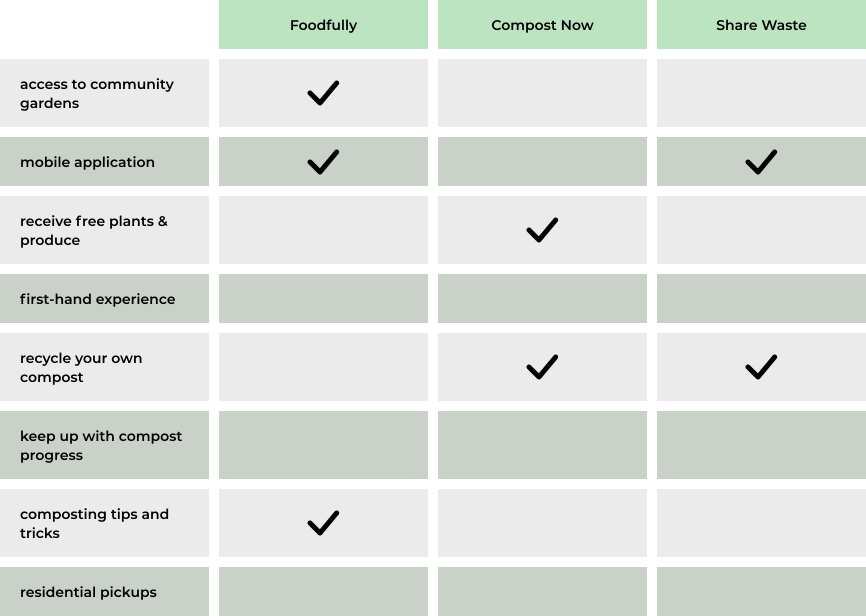
Our goal was to learn how to make the composting experience more approachable and interactive. We wanted to understand the broader perspective of the difficulties users face and what previous waste reduction initiatives exist.
Competitive Analysis
Our target audience is 18-24 year old individuals as they are the biggest consumers that waste food. Our app is aimed towards those who want to reduce their food waste while also providing for those who cannot afford fresh produce.
comp analysis
Surveys
SURVEY I
In this survey, we mainly focused on asking questions about food waste in the users’ households. We got a total of 130 responses and these are the insights we got out of it:
green cycle donut chart
80% End up throwing a third of their food away.
104 out of 130 respondents
Features of interest:
🧭  Explore recipes for your groceries
🌱  Tips on how to store groceries
ā— Ā Convenience is a core value
SURVEY II
After conducting the first survey, we wanted to find out about our user’s common experience. In this survey, we got a total of 80 responses and our main findings were that:
60%
Does not compost at home
80%
Are interested in using a service that helps them through the composting process.
87%
Are interested in doing something to help the environment.
Interviews
We interviewed several individuals to try to go into depth on the user’s experience with composting and food waste. Here are few quotes that stood out and reflected many users’ thoughts shown from our previous surveys:
happy face
ā€œComposting is something I’ve always wanted to try, but also potentially difficult in apartment living since I don’t know where I’d put or dump it.ā€
-Georgina, USF student
sad face
ā€œI would use this since I don’t know how to compost so this application would be helpful to know what and how to compost.ā€
-Felicia, student
thinking face
ā€œI always felt kind of guilty putting it down the drain or throwing away food into the trash.ā€
-Miranda, UCLA student
Additionally, we also talked to the director of the Campus Center for the Environment from UC Davis to get feedback and learn more about how compost gardens work to support our idea.
They mention that the plan was a good idea as our target audience are also people who are just starting to get independent so it’s better for them to start off practicing a form of sustainability earlier.

Analysis

Pain Points
From our research, we were able to deduce our user’s troubles from their standpoint.
1. No knowledge in composting
no knowledge for composting
2. No time to take action
no time
Affinity Mapping
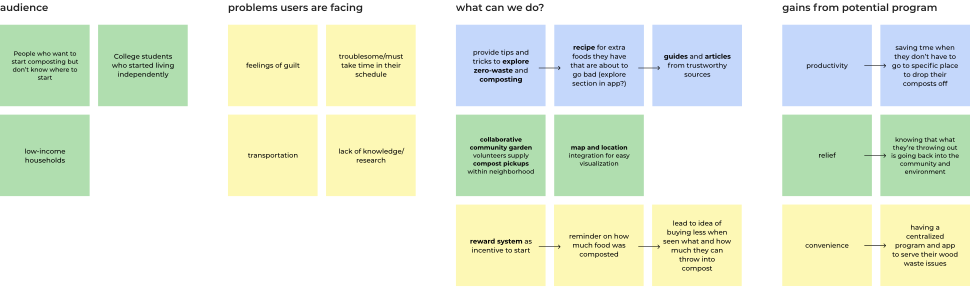
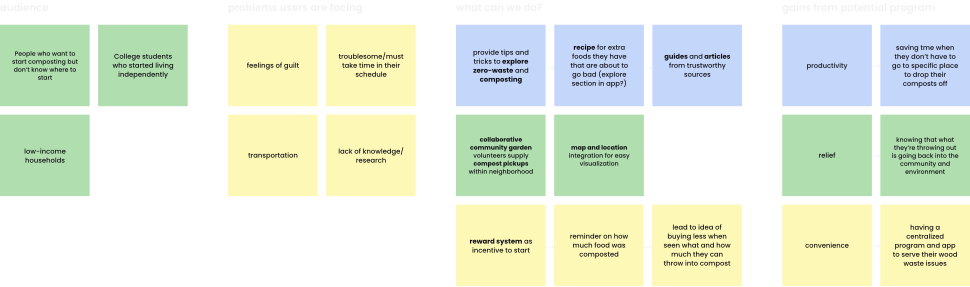
From the few research approaches we took, we organized an Affinity Map to sort the information and ideas we had to solve our challenge to reduce food waste. We brainstormed further with features that can be implemented to support users closer to a more sustainable lifestyle.
affinity map

Solution

We designed a program and an app that builds a waste-conscious community through partnering with accessible community gardens. Users would be able to donate their compostable and receive produce or small plants as reward for repeatedly donating their food waste to the gardens. The app consists of features like:

ā€Composting tips and tricks to help let our sustainable-minded users learn more ways to support their objectives.
ā€
Scheduling compost pick-up or drop-offs that allows an easy process for users to start and continue composting.
ā€
Rewards
is a small bonus part of the program allocating a positive boost to our users for doing something helpful to the environment.
solution still

Ideation

Lo-fi Sketches
We roughly sketched out ideas for the main screens.

We wanted to make Green Cycle to be as simple as possible while letting it still be visually stimulating & fun for user’s to use and interact with.
comp analysis
Style Guide
For the design system and branding, I created a style guide to keep our text and color scheme consistent. I also tweaked the text weight for varying emphasis.
Color Palette
color palette
Graphic Components
components
Font Style
font style
Font Sizes
font sizes

Final design

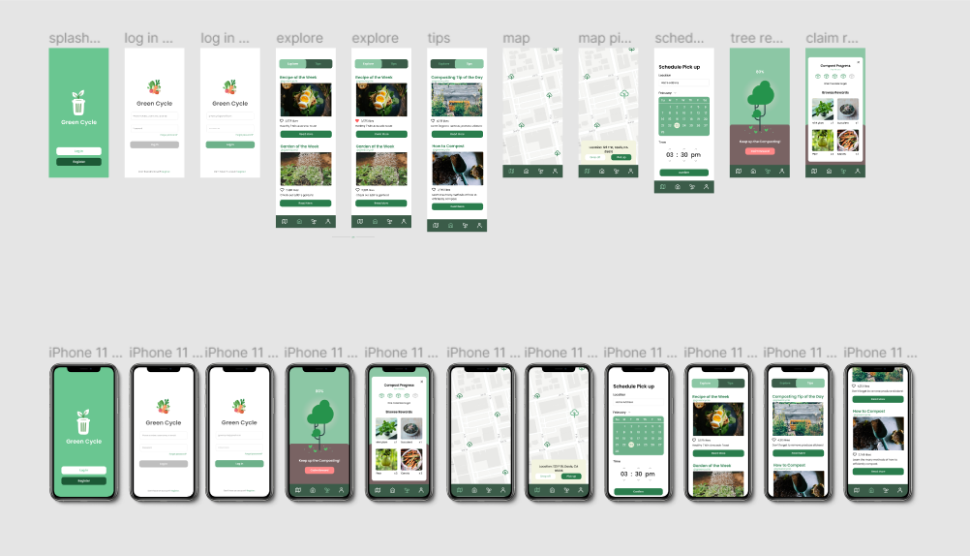
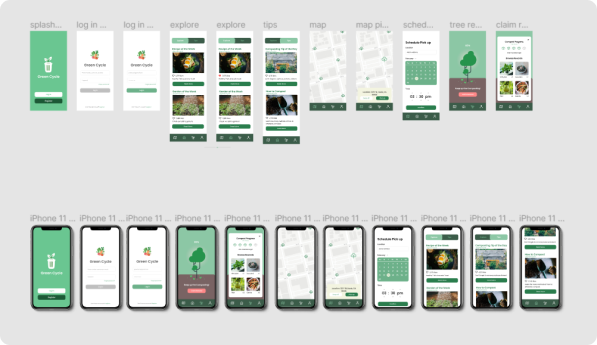
One of my teammates and I were in charge of making the final app design and mockups for the competition. This is how we envision our program platform to be like on an app.
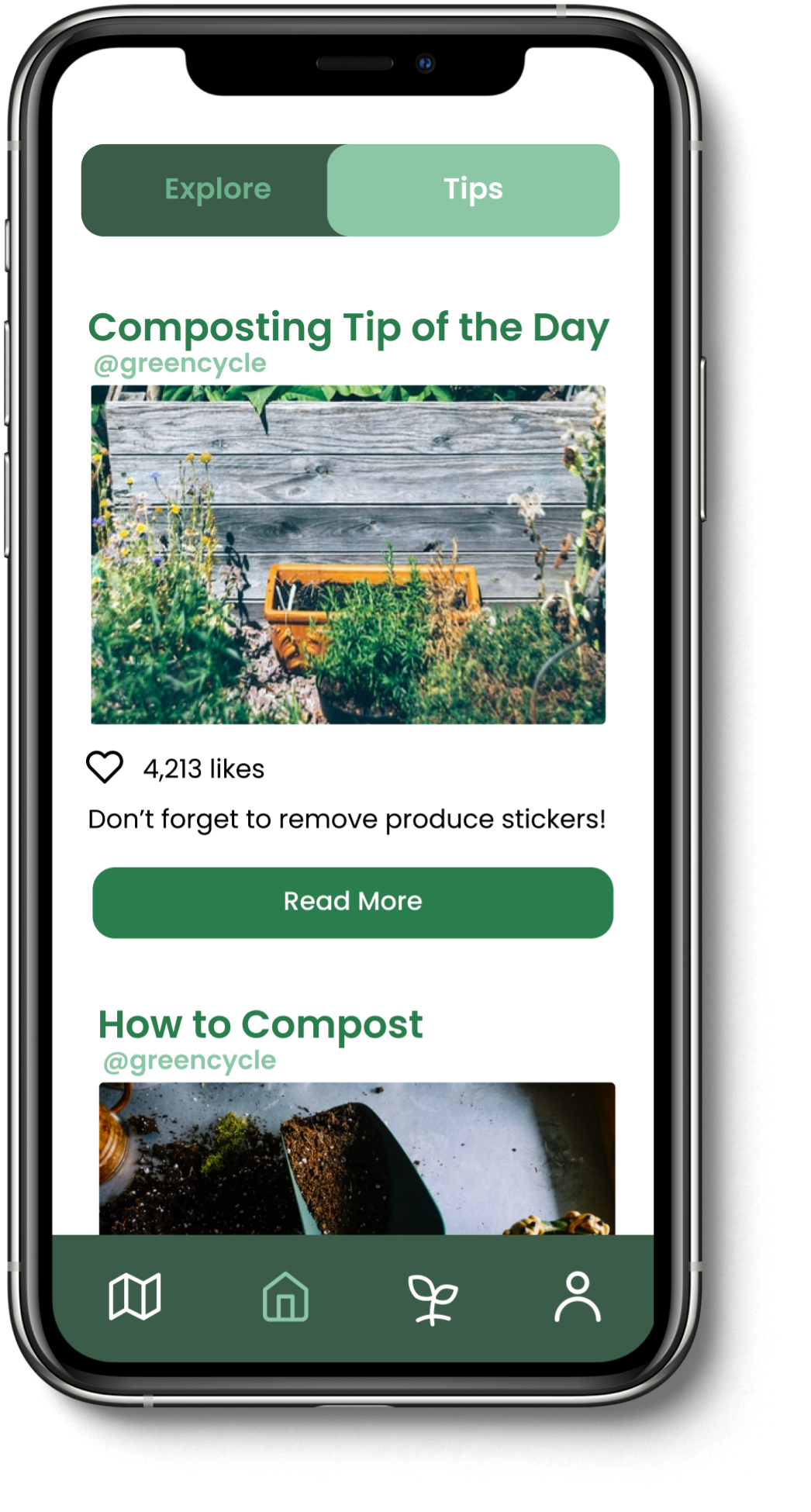
Explore and Tips 🌱
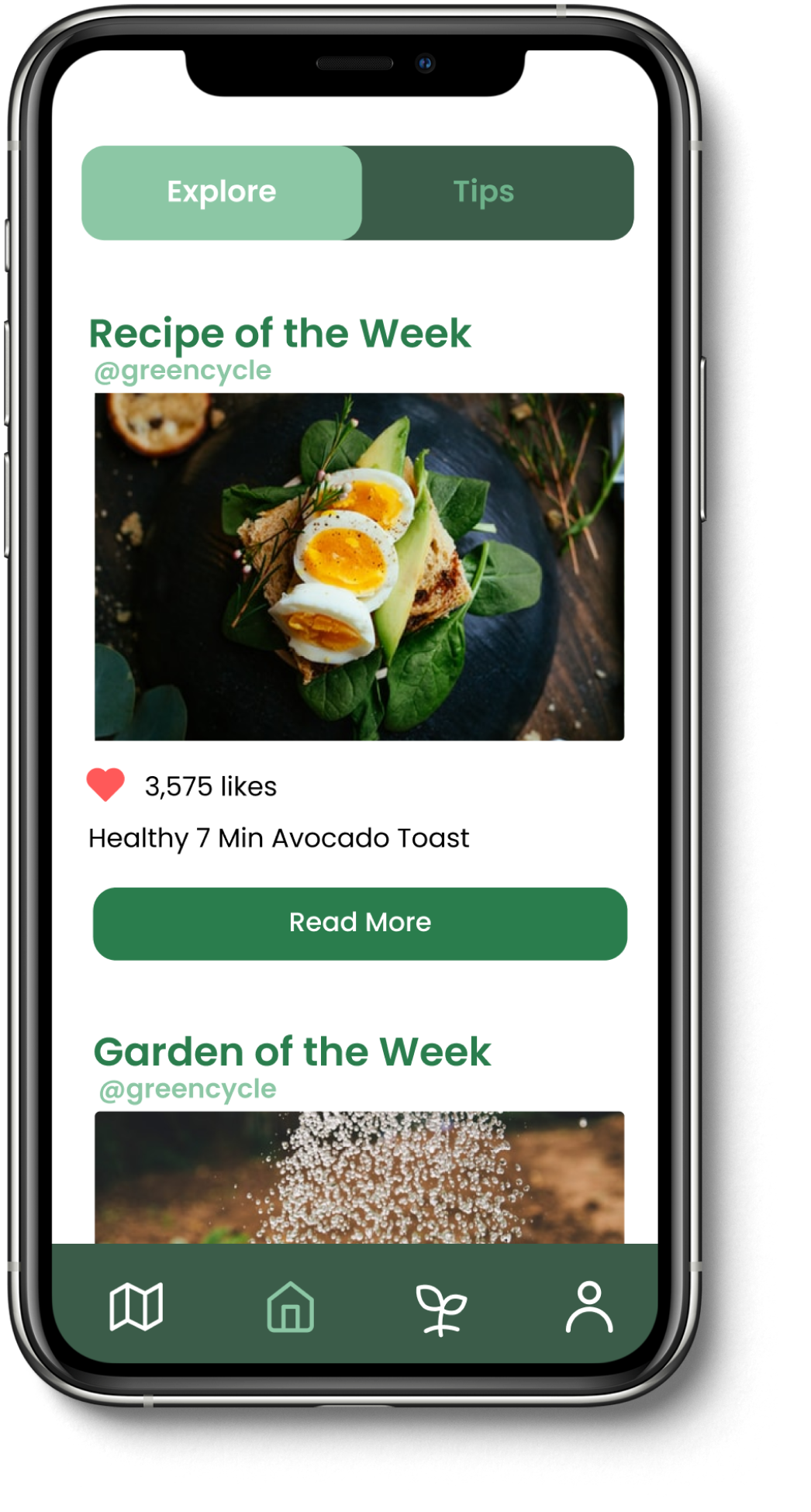
Explore posts from others about their recipes, gardens, and composting ideas.

And find tips and tricks from reliable sources on how to compost more efficiently and effectively.
design explore
Explore
design tips
Tips
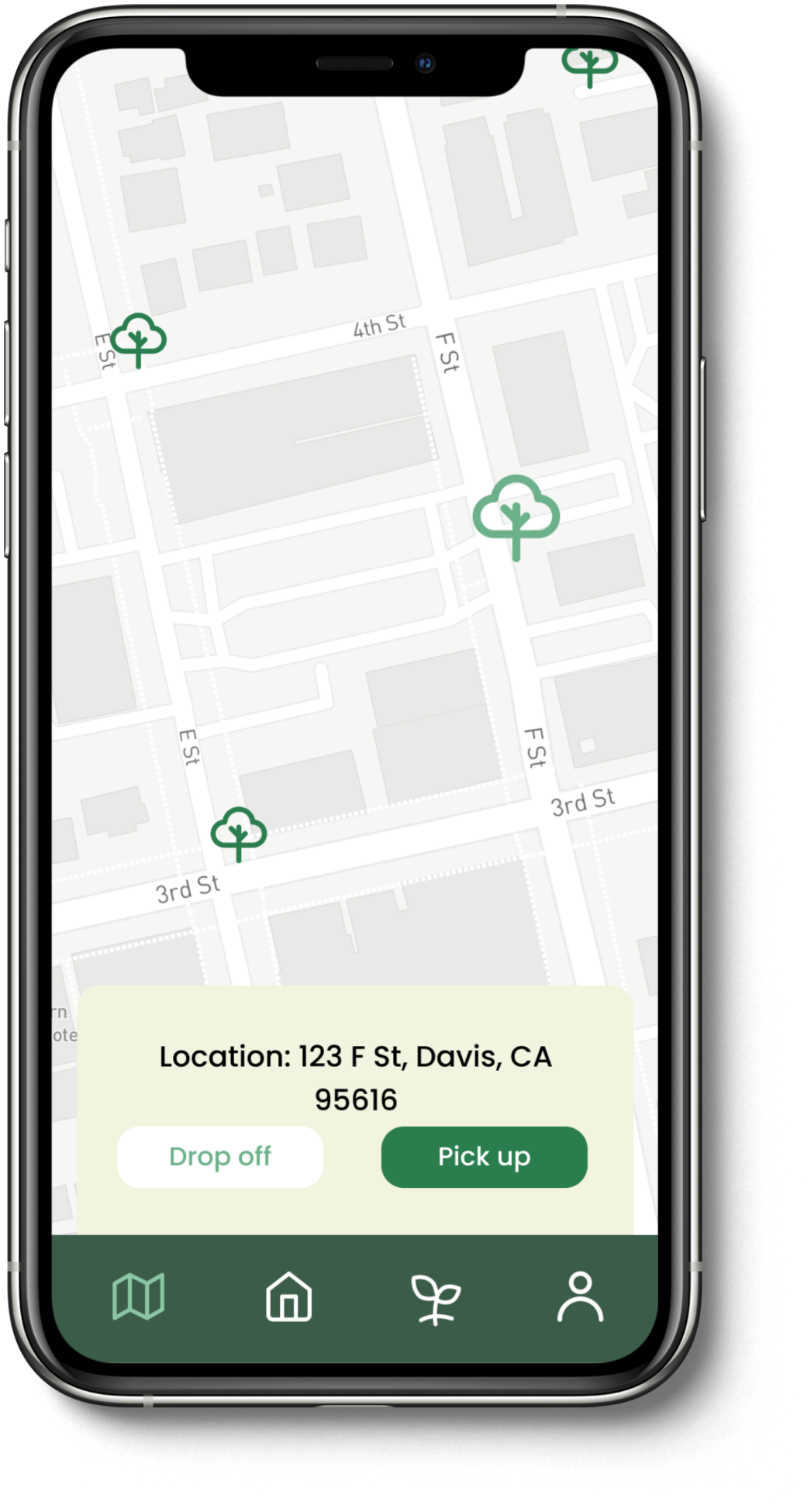
Compost Pickup 🚚
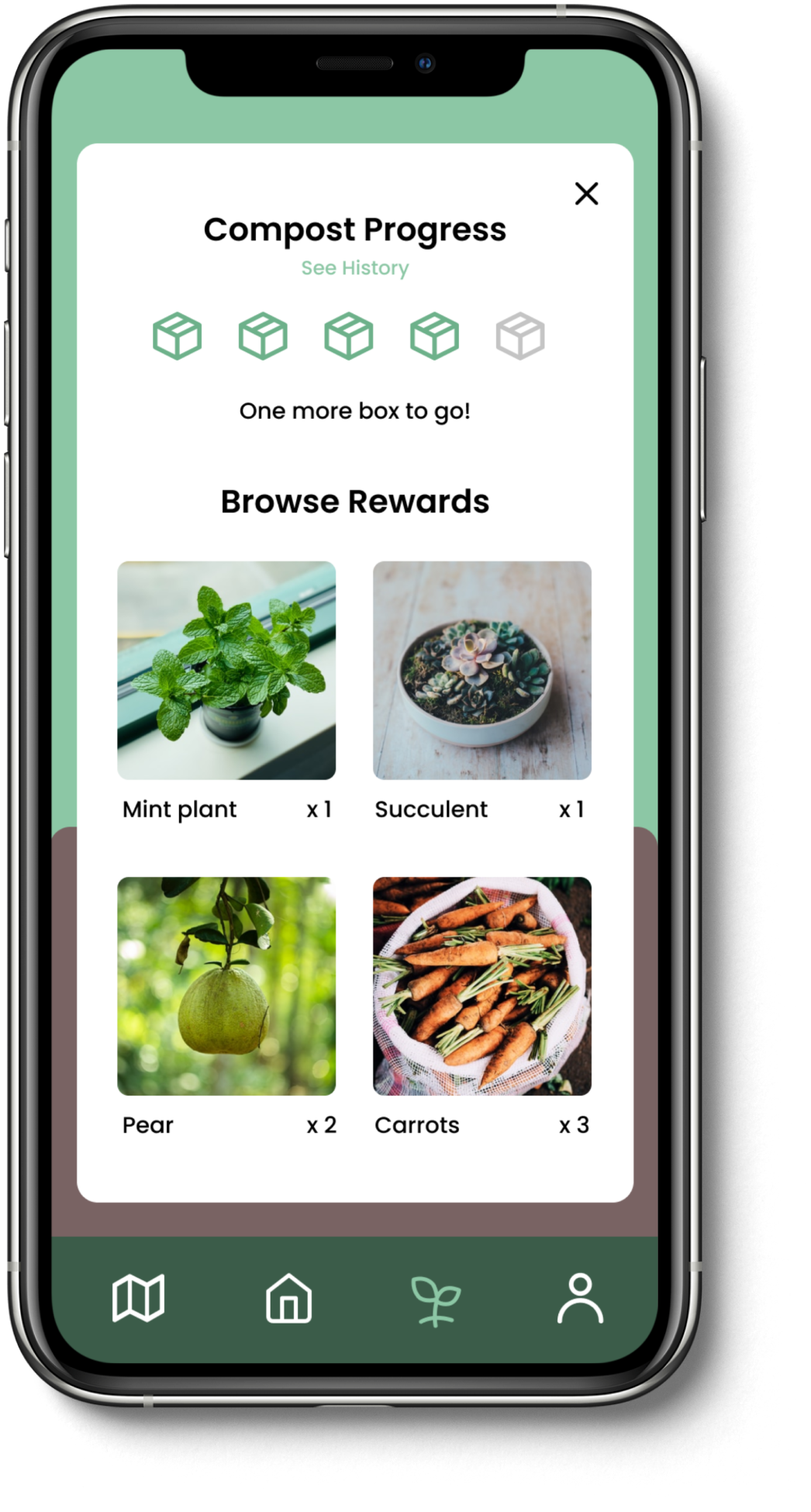
See the visual progress of your composting in the form of a growing tree.

Compost progress increases every time one drops off a box of compostable waste.

After five full boxes of compostable waste, earn rewards grown from the community gardens as a bonus.
design map
Compost Pickup I
design schedule
Compost Pickup II
Rewards šŸŽ
See the visual progress of your composting in the form of a growing tree.

Compost progress increases every time one drops off a box of compostable waste.

After five full boxes of compostable waste, earn rewards grown from the community gardens as a bonus.
design rewards 1
Rewards I
design rewards 2
Rewards II

Conclusion

What we learned and next steps
  • Analyzing user experience and survey results to find a solution to a problem.
  • How might we statements to stimulate the possibilities of solving the problem we want to address.
Though we got feedback for the idea and app, we did not have the time to do more user testing after we made the first prototype of our app. If permitted, we would like to get more input from the general public about our solution and Ā program, as well as the usability of our app design.
Check out my other projects!
BruinCreates Square thumbnailTreasure Thumbnail

Green Cycle

An app and program that gives compostables a second chance.
Won Best Interdisciplinary Hack for SacHacks III

Overview

Green Cycle is a community-based app where food is never wasted. Users can utilize this app to maximize a sustainable lifestyle by donating their spoiled groceries to local gardens. In return, they can be rewarded with produce and small plants.

Challenge

Food waste is usually poorly sorted out and end up in undesirable landfills. In an age where we are more sustainably aware, many are interested in helping the environment. We find it difficult to implement sustainable acts in our busy lifestyles.
Jump to Solutions
The Team
Fiona Truong
Jinyoung Yang
Rabida Abduwali
Tools
Figma, Miro, Adobe Illustrator, Zoom
My Roles
UX Research
Information Architecture
UI Design
Wireframes
Prototype
Timeline
10 weeks

Brainstorm

Audience
Our target audience is 18-24 year old individuals as they are the biggest consumers that waste food. Our app is aimed towards those who want to reduce their food waste while also providing for those who cannot afford fresh produce.
Key pointsšŸ’”
  • These individuals do want contribute to the sustainability of the community but are unable to do so due to the lack of knowledge and resources.
  • Our goal is to help address the UN Sustainable Goal of achieving Sustainable cities by 2030.
Taking consideration in these generated ideas and direction in our project, we constructed a How Might We statement
arrow
How Might We šŸ’­
design a system for consumers where less foods are bought, wasted, and disposed in the wrong places?

Research

Our goal was to learn how to make the composting experience more approachable and interactive. We wanted to understand the broader perspective of the difficulties users face and what previous waste reduction initiatives exist.
comp analysis
Competitive Analysis
Our target audience is 18-24 year old individuals as they are the biggest consumers that waste food. Our app is aimed towards those who want to reduce their food waste while also providing for those who cannot afford fresh produce.
Surveys
SURVEY I
In this survey, we mainly focused on asking questions about food waste in the users’ households. We got a total of 130 responses and these are the insights we got out of it:
80%
End up throwing 1/3 of their food away.
that is 104 out of 130 respondents!
Features of interest:
🧭  Explore recipes for your groceries
🌱  Tips on how to store groceries
ā— Ā Convenience is a core value
SURVEY II
After conducting the first survey, we realized we needed more information about a user’s common experience in terms with composting. We got a total of 80 responses and our main findings this round were:
60%
Does not compost at home
80%
Are interested in using a service that helps them through the composting process.
87%
Are interested in doing something to help the environment.
Interviews
We interviewed several individuals to try to go into depth on the user’s experience with composting and food waste. Here are few quotes that stood out and reflected many users’ thoughts shown from our previous surveys:
happy face
thinking face
sad face
ā€œComposting is something I’ve always wanted to try, but it is difficult in an apartment living since I don’t know where I’d put or dump it.ā€
ā€œI would use this platform since I don’t know how to compost. This application would be helpful to know what and how to compost.ā€
ā€œI always felt kind of guilty putting it down the drain or throwing away food into the trash.ā€
-Georgina, USF student
-Felicia, high school student
-Miranda, UCLA student
Additionally, we also talked to the director of the Campus Center for the Environment from UC Davis to get feedback and learn more about how compost gardens work to support our idea.
They mention that the plan was a good idea as our target audience are also people who are just starting to get independent so it’s better for them to start off practicing a form of sustainability earlier.

Analysis

Pain Points
From our research, we were able to deduce our user’s troubles from their standpoint. What problems are stopping them from composting?
1. No knowledge in composting
no knowledge for composting
2. No time to take action
no time
Affinity Mapping
From the few research approaches we took, we organized an Affinity Map to sort the information and ideas we had to solve our challenge to reduce food waste. We brainstormed further with features that can be implemented to support users closer to a more sustainable lifestyle.
Bruincreate affinity map
3 things we would be providing the users are:
🧭  Productivity
🌱  Relief
ā— Ā Convenience

Solution

We designed a program and an app that builds a waste-conscious community through partnering with accessible community gardens. Users would be able to donate their compostable and receive produce or small plants as reward for repeatedly donating their food waste to the gardens. The app consists of features like:

ā€Composting tips and tricks to help let our sustainable-minded users learn more ways to support their objectives.
ā€
Scheduling compost pick-up or drop-offs that allows an easy process for users to start and continue composting.
ā€
Rewards
is a small bonus part of the program allocating a positive boost to our users for doing something helpful to the environment.
background of bikergreen cycle speech bubblegirl on bike

Ideation

comp analysis
Lo-fi Sketches
We roughly sketched out ideas for the main screens.

We wanted to make Green Cycle to be as simple as possible while letting it still be visually stimulating & fun for user’s to use and interact with.
Style Guide
For the design system and branding, I created a style guide to keep our text and color scheme consistent. I also tweaked the text weight for varying emphasis.
Color Palette
color palette
Graphic Components
components
Font Style
font style
Font Sizes
font sizes

Final design

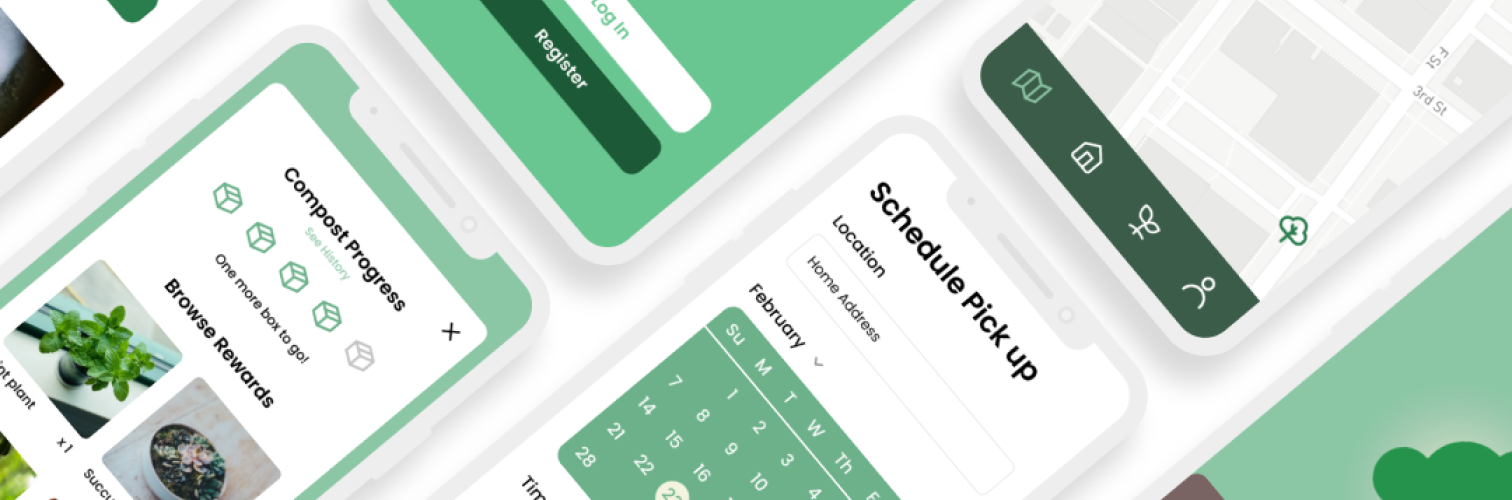
One of my teammates and I were in charge of making the final app design and mockups for the competition. This is how we envision our program platform to be like on an app.
design explore
Explore
design tips
Tips
🌱 Explore and Tips
Explore posts from others about their recipes, gardens, and composting ideas.

And find tips and tricks from reliable sources on how to compost more efficiently and effectively.

The toggle makes it easy to switch between the two pages.
🚚 Compost Pickup
To make it easier to decide whether to pick-up or drop-off compost, we included a map to help users envision their distance from each drop off spot.

If locations are too far or if the user is busy, our program provides a residential pick-up service for those whose location is inconvenient or does not have the time in the day to drop off.

ā€
design map
Compost Pickup I
design schedule
Compost Pickup II
design rewards 1
Rewards I
design rewards 2
Rewards II
šŸŽ Rewards
Allow the visual progress of food waste gone unwasted through a growing tree.

Compost progress increases every time the user contributes a box of compostable waste to a local community garden.

If applicable with the community gardens, small tokens of appreciation would be available for redeeming after five full boxes of compost. Not only the user is able to help with creating a more sustainable city, they are also seeing their impact and the growth of new produce thanks to their donations.

Conclusion

What we learned and next steps
  • Analyzing user experience and survey results to find a solution to a problem.
  • How might we statements to stimulate the possibilities of solving the problem we want to address.
Though we got feedback for the idea and app, we did not have the time to do more user testing after we made the first prototype of our app. If permitted, we would like to get more input from the general public about our solution and Ā program, as well as the usability of our app design.
Check out my other projects!
BruinCreates Square thumbnailTreasure Thumbnail